
This should not be a symbolic fight over whether we care more about safety or civil liberties. We can care about both.
By Teresa Coryell House
As a woman living in Minneapolis, I want to continue enjoying the lakes, trails, and parkways that make this city special. I take common-sense precautions, and I understand that no city can promise total safety. But public spaces should be usable, welcoming, and safe for everyone — without residents having to constantly calculate the risk.
That is why I support the responsible use of automated license plate reader technology.
I understand why some of my neighbors are deeply concerned about expanding surveillance tools. That concern is not paranoid or unreasonable. Government power can be misused. Data can be kept too long, shared too broadly, or used for purposes people never agreed to. Communities that have experienced over-policing have every reason to ask hard questions before giving law enforcement new technology.
Those concerns should be taken seriously. They should shape the policy.
But I do not believe the answer is to reject every useful public safety tool outright. The answer is to build a policy that is both meaningful and accountable — one that helps law enforcement respond when time matters, while also protecting residents from abuse, overreach, and mission creep.
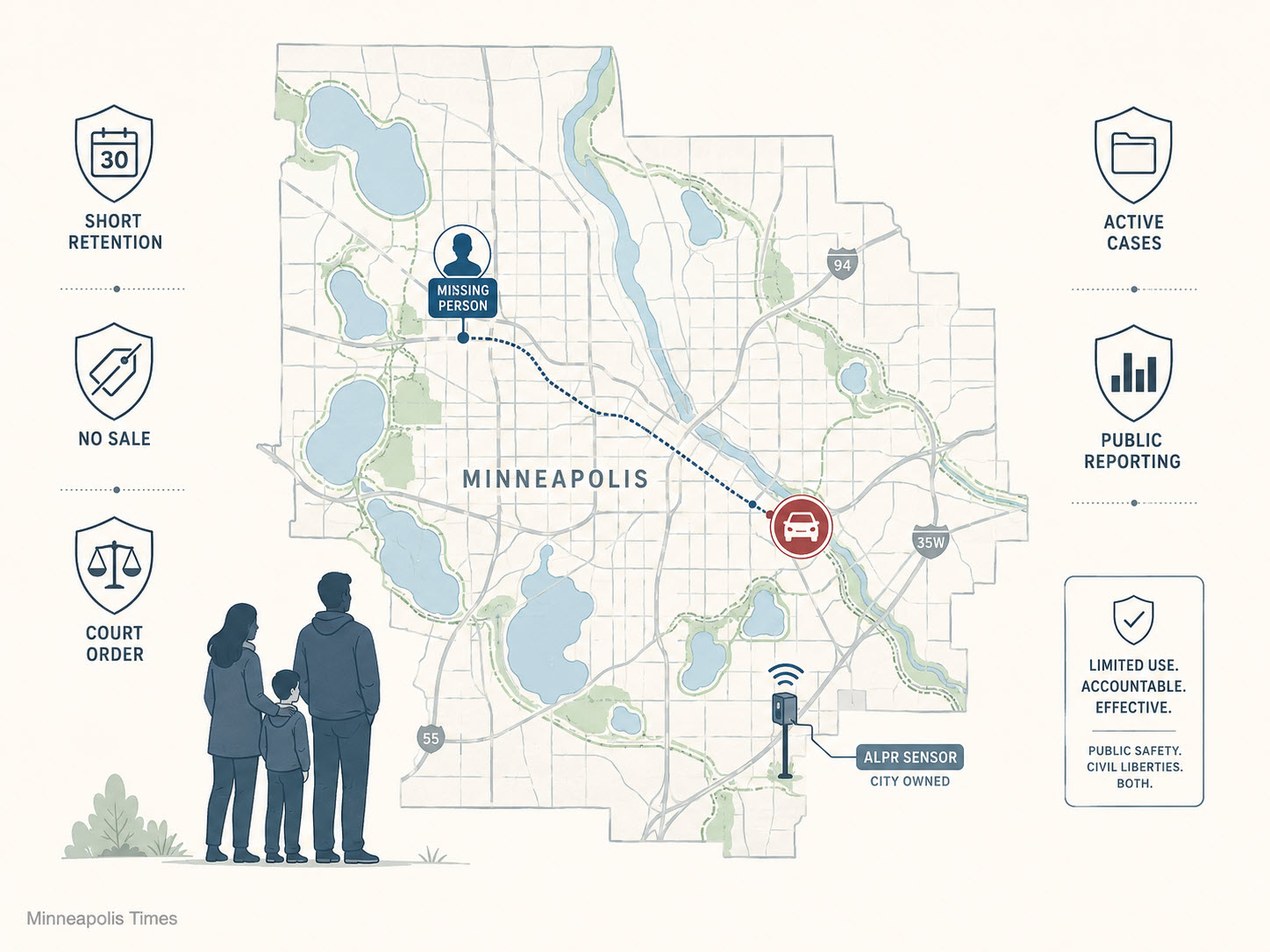
Automated license plate readers are not about catching speeders or turning every street into a surveillance zone. Used properly, they can help locate a missing child, find a vulnerable elder, recover a stolen vehicle, or support an active investigation tied to a specific car.
The safeguards matter as much as the technology itself. Minneapolis should require short data-retention limits, no selling or commercial use of the data, no use for immigration enforcement, no broad sharing with outside agencies without a warrant or court order, access limited to active investigations and alerts, and regular public reporting so residents can see how often the technology is used, why it is used, and whether it is working as promised.
This should not be a symbolic fight over whether we care more about safety or civil liberties. We can care about both. Progress should not mean a blank check, and caution should not mean paralysis. We can set firm guardrails and still use responsible tools that help keep people safe.
Used responsibly, this technology is not the whole answer. But it can be one practical tool to help bring people home, solve serious crimes, and keep Minneapolis neighborhoods safer.
Teresa Coryell House, Minneapolis

“Automated license plate readers are not about catching speeders or turning every street into a surveillance zone. Used properly, they can help locate a missing child, find a vulnerable elder, recover a stolen vehicle, or support an active investigation tied to a specific car” Trusting Flock to not turn Minnesota into a surveillance state is naive. There are almost zero controls on how the technology is being used, try doing a simple Google search, or follow one of many YouTube lawyers who cover the subject. https://youtu.be/LrDtjUCZZrc?si=vOwnGP3nFawFWL4J