
At one time or another, every person of a certain age was warned, “Don’t borrow trouble.” There’s enough that should concern people in day-to-day living without creating new problems.
That’s certainly true today in the world of politics and policy. Daily assaults on the Constitution, the rule of law and core institutions should keep everyone either fully engaged or ducking under covers and staying in bed all day, depending on one’s fortitude and outrage.
Let’s not borrow trouble, but let’s also not bury our heads in the sand and ignore a brewing crisis: partisan and blatantly political judicial elections. The ugliness and destructive consequences of down-and-dirty judicial elections showed up on Minnesota’s doorstep nearly 20 years ago, geographically and ideologically. It’s only getting worse.
Since at least 2008, when Justice Louis Butler became the first incumbent justice of the Wisconsin Supreme Court since 1967 to lose an election, political campaigns for that state’s top court have been increasing in vitriol and costs.
Earlier this year, Wisconsin was home to the ugliest and most expensive judicial contest in U.S. history. The 2025 Wisconsin Supreme Court race featured more than $100 million in spending by the candidates and interest groups, many of them from outside the state. Elon Musk and his affiliated political groups spent an estimated $20 million in what turned out to be a losing effort.
Former Minnesota Gov. Al Quie was among those paying attention to the trend in Wisconsin two decades ago. “Some people say that these abuses could never happen (in Minnesota), but that’s not true,” Quie told a reporter a few months after the 2008 Wisconsin election. “Once the war starts the shooting doesn’t stop.”
Quie chaired a judicial reform commission that proposed ending contested judicial elections. The commission urged a constitutional amendment that would implement “retention election.” Court vacancies would be filled by gubernatorial appointments. An independent panel of qualified experts would provide a periodic evaluation of the judges who would stand for election every eight years. Rather than an opponent, though, the fate of the incumbent judge would be determined by a “yes” or “no” vote of those going to the polls. If the “no” votes prevail the judge is recalled and the governor would appoint a replacement based on specific merit criteria. More complicated than a head-to-head contest but certainly better than what has consumed Wisconsin.
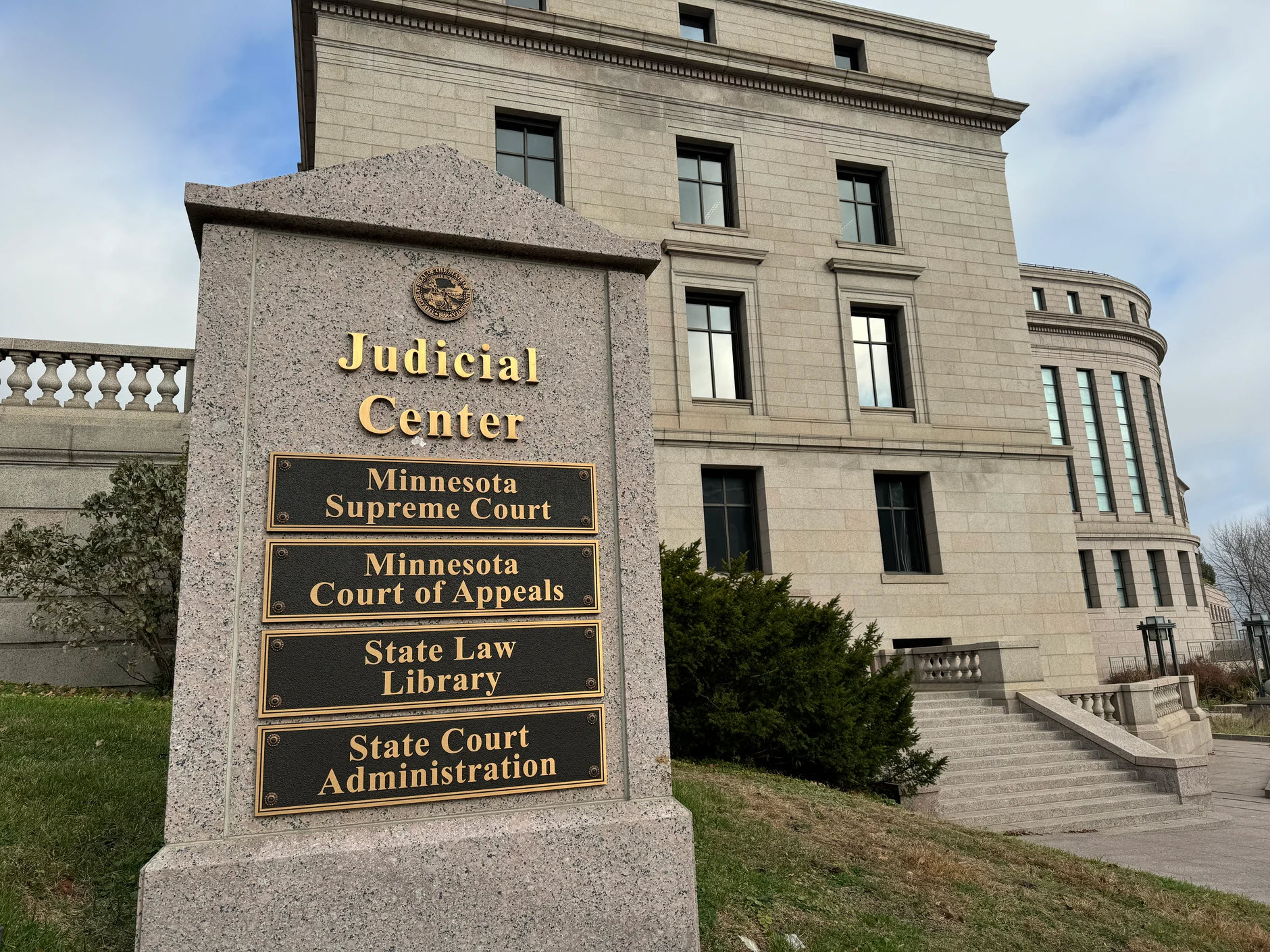
Minnesota still has relatively civil and non-partisan judicial races. It’s not borrowing trouble when three big red flags are warnings to Minnesota of what might be down the road.
First, trust in the courts is declining rapidly. A Gallup survey from 2024 found that only 35% of Americans have confidence in the judicial system, a decline of 23% in just four years. Public opinion on the most visible court, the U.S. Supreme Court, is evenly divided, according to an August 2025 Pew Research survey. Forty-eight percent of Americans have a favorable view of the top court – a decline of 22 percent since 1970 – while 50% have an unfavorable view. Public dissatisfaction with an institution can be a powerful incubator for bad policy changes.
Second, some judges are normalizing partisan benches. Wisconsin Supreme Court Justice Rebecca Bradley recently announced she will not seek reelection to a new 10-year term next April. Bradley explained her decision by saying, “I believe the best path forward for me to rebuild the conservative movement and fight for liberty is not as a minority member of the court.”
The obvious inference of Bradley’s stunning comment is that she sees advancing the “conservative movement” as an appropriate task of a judge, just not one that she can do effectively on a bench now controlled by liberals. Certainly, a judge’s rulings are influenced by one’s ideology. It is naive to think otherwise. But rebuilding a political “movement,” conservative or liberal, should be far removed from a judge’s to-do list. Yet, Bradley gave voice to what partisan judicial campaigns force on candidates in contested, political election battles – to become warriors for “movements.”
The third driver is Donald Trump. There are few red lines of political impropriety that Trump and MAGA are unwilling to cross. Who would have thought a few months ago that some of the most consequential elections in 2025 will be fought over congressional redistricting? Trump’s frequent criticism of judges and their rulings is a short step from demanding more partisan state courts.
Such a demand would fall on receptive ears of many Minnesota Republicans. The GOP long has pushed for more political judicial races and have won important court rulings allowing more explicit campaigning on cases that may well come before the courts. In 2024, Republicans mounted campaigns against Supreme Court justices appointed by Gov. Tim Walz. Matthew Hanson came within 13% of the incumbent judge – an unusually close judicial race by Minnesota standards – overtly positioning himself as an ideological alternative to his DFL-appointed opponent.
It seems a likely bet that if Republicans gain control of state government in the 2026 elections, Minnesota will tip to Wisconsin-style expensive, partisan and ugly elections.
There’s another idiomatic phrase, less common, but no less appropriate: “Don’t trouble trouble until trouble troubles you.” Minnesotans should be troubled by the bad habits of our neighbors to the east, by the growing erosion of confidence in the courts and by a President who sees impartial courts as just one more institution to re-make to his liking and political advantage.
Minnesota doesn’t need and can’t afford the trouble of $100 million court elections and candidates currying voters’ favor by promising to rule this way or that on the basis of ideology rather than the facts of a case. Before we get to those troubling promises, Minnesota voters should demand of the candidates for governor and state legislature a pledge to keep the state’s courts non-partisan and non-political.
Quie’s reforms are worth discussing once again. There is no need to borrow trouble. There also is no excuse to ignore trouble when it is knocking on the door.
