
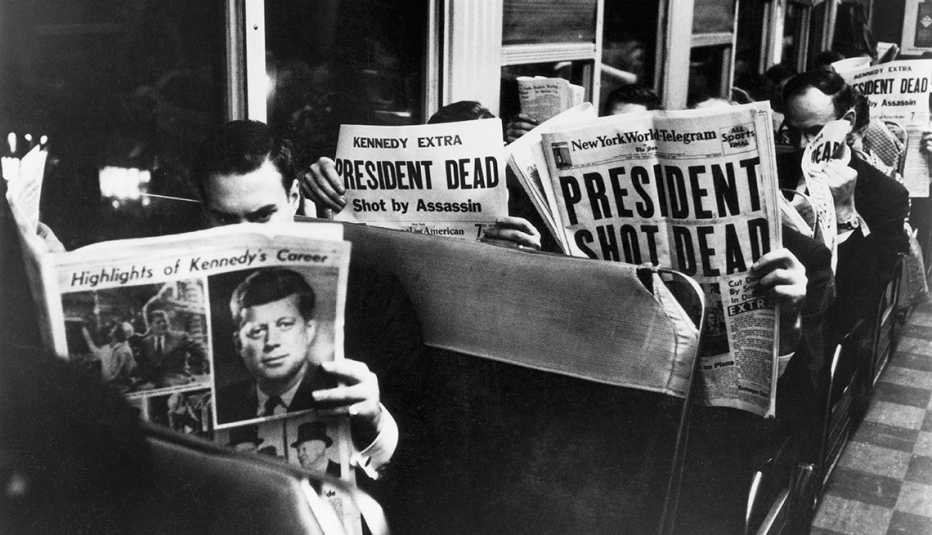
Anyone of age, about 6 or 7 years or older, in late 1963, or in their late 60’s or more now, remembers precisely where they were 62 years ago on November 22, 1963, when President John F. Kennedy was assassinated at mid-day while riding in a motorcade through downtown Dallas, Texas, and those born later are familiar with the gruesome events of that day and its aftermath.
But few recognize that this cataclysmic event had impacts on the law, including effects on jurisprudence here in Minnesota. Those repercussions warrant review on the commemorative date, this Saturday, November 22.
At the Federal level, the assassination led to enactment of a measure prohibiting assault or murder of the President or other high-level Federal officials. The post-shooting interrogation by law enforcement personnel of alleged assassin Lee Harvey Oswald led to the Supreme Court ruling three years later in the famous Miranda v. Arizona case providing rights to accused, including the well-known Miranda warnings that are familiar to all from police television shows.
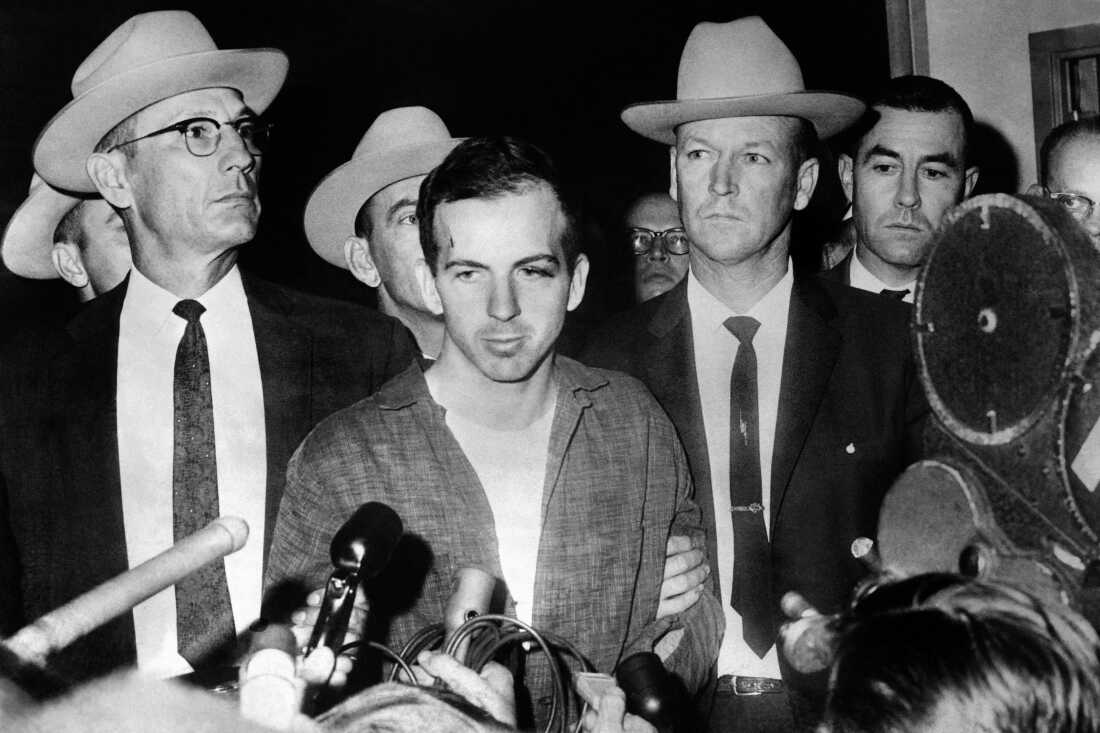
The televising of the jury verdict in Texas state court at the conclusion of the trial of Jack Ruby, Oswald’s killer, was the first televised criminal proceeding, which paved the way for the “cameras in the courtroom” movement that arose about a decade later and spread to nearly all states, including Minnesota, a latecomer in 2023.

Here in Minnesota, the JFK assassination has also seeped into the jurisprudence of the state.
Threat Topics
An unusually large number of cases have dealt with the topic of threats to the President. One was a 2011 case entitled U.S. v. Christenson in which posting of threatening emails on the White House website during the Obama administration resulted in criminal charges and a probationary sentence for a Minnesota man.
It was one of a number of Presidential threat cases decided by the Federal trial and appellate courts in the state, including some against the pair of Presidential predecessors, the two Bushes and Ronald Reagan as well.
For some inexplicable reason, Minnesota and six surrounding states comprising the Eighth Federal appellate circuit, one of 12 circuits around the country seems to have become ground zero for Presidential threats.
Minnesota Matters
But anti-social behavior of lesser magnitude concerning Presidential matters also abound here.
An employee of a gas station and convenience store, formerly headquartered in Woodbury who made loutish statements over a loudspeaker, heard by customers on the premises, including derogating Obama, was denied unemployment compensation benefits in a 2010 case in a case entitled Goble v. Speedway Super America, Inc. The claimant, a shift leader at a gas station convenience store, got into an argument with an African-American customer 10 days before the president’s inauguration three years ago. The customer, asserting racism, said it was a “good thing Obama was elected,” which elicited the employee to say over the store’s outdoor intercom “Obama sucks.”
The Department of Employment and Economic Development (DEED) in St. Paul deemed him ineligible for unemployment due to disqualifying “misconduct,” and the Minnesota court of appeals affirmed because the employer could “reasonably expect [him] to adhere to higher standards of behavior.” He had been warned after a prior incident involving misuse of the loudspeaker and his “repeated abuse of the intercom system” resulted in a “loss of trust.”
But hearing offensive remarks about the President that prompted a human resources worker in Osseo to quit her job were insufficient to obtain unemployment benefits in a case decided three months later in Nelson v. Pinnacle Engineering, Inc. The employee, a white woman, resigned because of several incidents that she claimed created a hostile work environment, including being passed over for a bonus and hearing profanity and a racial epithet about Obama, which she found improper because she thought it reflected unfavorably on her fiancé, who was black. One of the offending comments was a remark by the company’s CEO characterizing a rifle he gave to an employee as a “gift for you for all the Obama people outside.”
The ex-employee’s claim for benefits was denied by DEED, and the Minnesota Court of Appeals affirmed because none of the incidents was sufficiently grave to cause “an average, reasonable employee to quit,” even though “highly inappropriate remarks [the] … use of the profanity and racial epithet” about the president were not “good cause” to quit since they were “not directed” at the claimant. Since they took place some six months before she resigned, her resignation was “questionable.”
Shooting Simulated
One of the most bizarre and tragic assassination-related cases occurred in Dakota county, where a simulated re-enactment of the president’s assassination formed the basis for an unsuccessful wrongful death lawsuit in a 1971 case entitled Greaves v. Galchutt.
The case arose out of an incident in which an 11-year-old boy was killed when a friend took a loaded .22 rifle from the decedent’s home in an attempt to re-enact the Kennedy assassination. The 11-year-old was struck by a bullet fired during the re-enactment by the other youth, who hid the gun from “a position behind him and accidentally killed him.” A jury in Dakota County District Court found that assumption of risk barred a wrongful death action brought on behalf of the deceased boy against the shooter as well as the decedent’s own brother and grandmother.
The State Supreme Court affirmed, rejecting the challenge to the assumption of risk defense with “no difficulty.” Although youthful, the decedent had taken a course on gun safety, using the rifle with which he was “thoroughly familiar.” The case was a “classic example” of assumption of risk, because the youth was aware of the “dangers inherent in handling a firearm, and deliberately chose to encounter those dangers.” Under these circumstances, the jury not only reasonably found the claim barred by assumption of risk but was “virtually compelled” to make such a determination in these “tragic circumstances.”
Assassination Activities
In addition to these cases, Minnesota’s connection to the JFK assassination is reflected in the activities of a few Minnesotans.
One of the assassination activists is U.S. Senior District Court Judge John Tunheim, who was appointed three decades ago to head oversight of the investigative attorney that was tasked with reviewing the accessibility and confidentiality of assassination records by virtue of the JFK Assassination Records Collection Act.
Inspired by Oliver Stone 1991 movie “JFK” and authored by Ohio Sen. John Glenn, the legislation created a group that was charged with considering accessibility of four documents that had been kept under wraps for years. The jurist from Minnesota was selected to head the unit whose work spanned more than three decades.

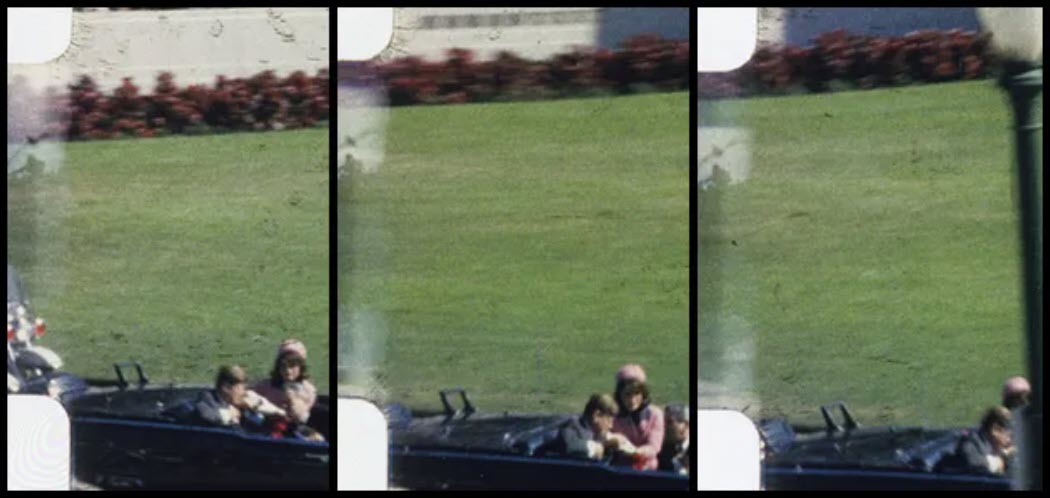
Assassination conspiracy buffs and skeptics of the Warren Commission’s conclusion of a lone assassin (that pinned the crime on Oswald acting alone) included Minnesotans. One of them is James Fetzer, an emeritus professor of philosophy at the University of Minnesota Duluth (UMD). Still residing in Duluth in retirement, he has been a proponent of conspiracy theories concerning major traumatic events including 9/11, the Sandy Hook school shootings, and the Paul Wellstone airplane crash. But he cut his conspiratorial teeth around the time of the “JFK” movie, contending in many writings and public appearances that the assassination was a “government hit” and the Zapruder film that captured the event in the JFK motorcade passing in front of the infamous Texas School Book Depository building was a “fake.”
Fetzer was later sued in connection with another of his conspiracy claims concerning the Iron Range airplane crash that killed DFL Sen. Paul Wellstone in the waning days of the 2002 election, which he attributed to his Republican party adversaries. One of those operatives that Fetzer blamed sued him for defamation in the 2005 case of Bieter v. Fetzer. The case was dismissed by the St. Louis County District Court, a ruling that the Court of Appeals upheld on grounds that the claimant was a “public figure” and there was insufficient proof of “actual malice,” consisting of knowing falsity or reckless disregard for the truth required under the Supreme Court doctrine of New York Times v. Sullivan.
But he wasn’t as fortunate in a subsequent suit as he was nailed by a Wisconsin state court jury for $450,000 in an action brought by a father of a Sandy Hook shooting victim, which was upheld on appeal.
Fetzer has gone on to extol Russia and Iran for their “leadership” in the international community while pillorying the United States and Israel as the “greatest threats to freedom and democracy” in the world.
Another man from northern Minnesota took an anti-conspiracy view about the JFK assassination: Vincent Bugliosi, the famed prosecutor of the Charles Manson cult in Southern California in the early 1970’s, was born and raised in Hibbing and migrated west after winning the state high school tennis championship in 1951. One of the lawyer-turned author’s many books, “Four Days in November,” written 45 years after the event, one of a trio of his books that refuted the Fetzer-type conspiracy theories and supported the Warren Commission’s Oswald-did-it-alone conclusion.
The 60th anniversary of the JFK assassination a couple of years ago served to close the book on that sea-change event. But the release ordered by President Trump this spring of nearly all of the remaining secret government documents stirred more recollections by young and old alike.
Now, on the 62nd anniversary, this look back at how the assassination affected the law may do so, too.

Thank you for the write up. Lots of good information. Pinnacle Engineering’s CEO characterizing a rifle he gave to an employee as a “gift for you for all the Obama people outside.” I looked up Pinnacle. An environmental engineering firm of all things.