
This year marks the 30th, 40th, and 50th year anniversaries of a series of scandals and lawsuits that have plagued the University of Minnesota men’s basketball team on the campus here in Minneapolis.
The team’s new coach, Roseville native Niko Medved, has the daunting task of digging out of the morass he inherited, which is traceable to those incidents. Their highlight, or “lowlight,” occurred 40 years ago last week, January 23, 1986, to be precise.
That night and into the ensuing morning four decades ago, three Gophers basketball players had a post-game sexual encounter with an 18-year-old woman in Madison, Wisconsin, shortly after the Gophers had pulled off a last-second buzzer beating 67-65 victory over the University of Wisconsin at the Badgers’ decrepit Fieldhouse in Madison, replaced by a state-of-the art one in Madison a dozen years later.
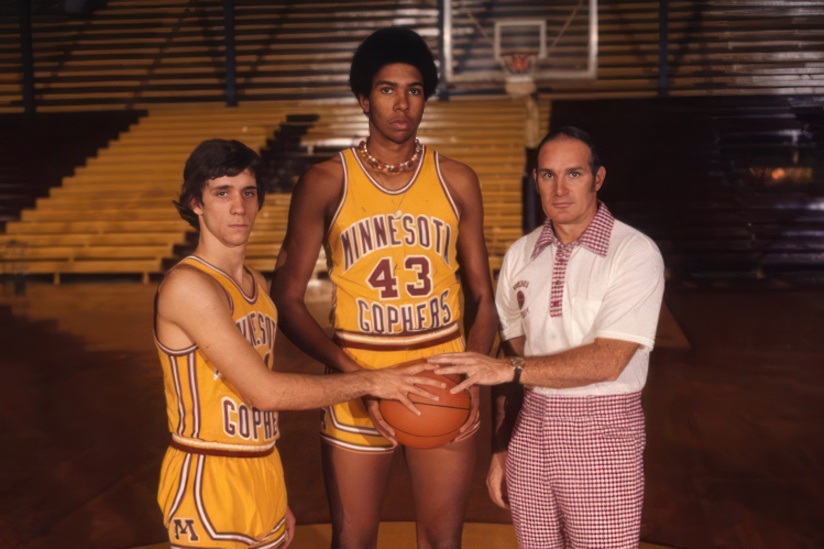
The charges against the trio resulted in their immediate suspension from the team and prompted the Athletic Department to forfeit the next game against Northwestern over the objections of the club’s coach, Jim Dutcher, who four years earlier had led the team to its second Big Ten title in nearly 50 years, dating back to a co-championship in 1937. Upset with the Athletic Department’s handling of the “Madison 3,” Dutcher resigned to go into successful–and less stressful–fields of investment advising and basketball broadcasting.
His departure led the Gophers to a 40-year period of valleys and peaks, littered with scandal and litigation, including the next conflagration that occurred a decade later.
Williams Woes
When Dutcher quit after the Madison incident, the U elevated his assistant Jimmy Williams to short-term interim men’s head coach, who took over before he became enmeshed in litigation when he was offered a chance as an assistant coach to return to Williams Arena, the Gophers home court since 1929, but ended up himself in Hennepin County District Court here in Minneapolis and then before the state Supreme Court across the River in St. Paul.
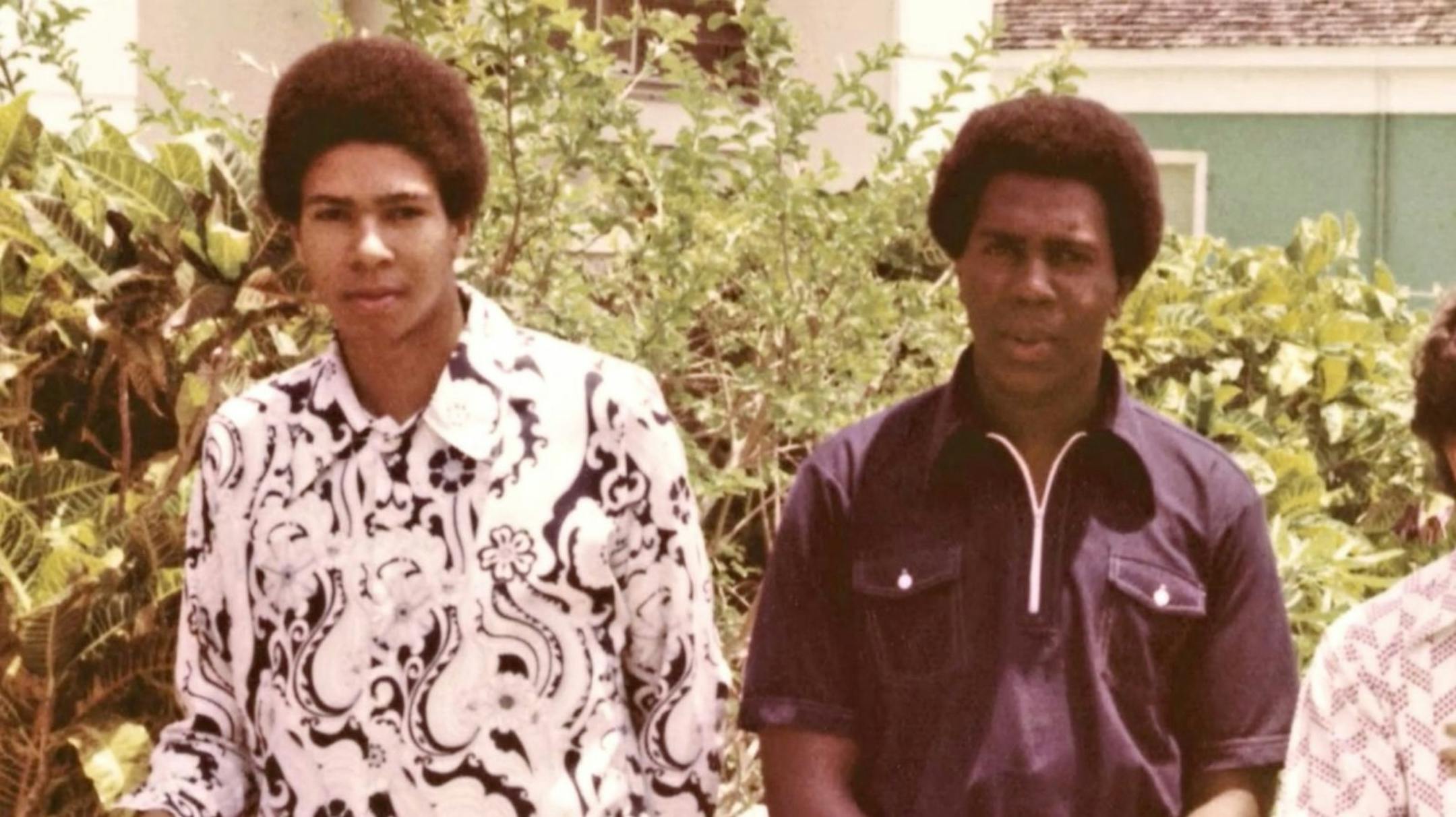
That legal woes began when Williams was extended an assistant coach position 20 years later under a new coach, Tubby Smith. But Smith’s overture was nixed by the Athletic Department, which recoiled at Williams’ involvement in collegiate rules infractions during his time at the U.
Not content to walk away quietly, Williams sued for breach of contract and won a $1 million verdict from a jury in Hennepin County fir beaching the arrangement. But the state Supreme Court overturned that ruling five years later in a case entitled Williams v. Board of Regents. It reasoned that Smith lacked “authority in instigating a prospective employment relationship,” which was solely up to the Board of Regents.
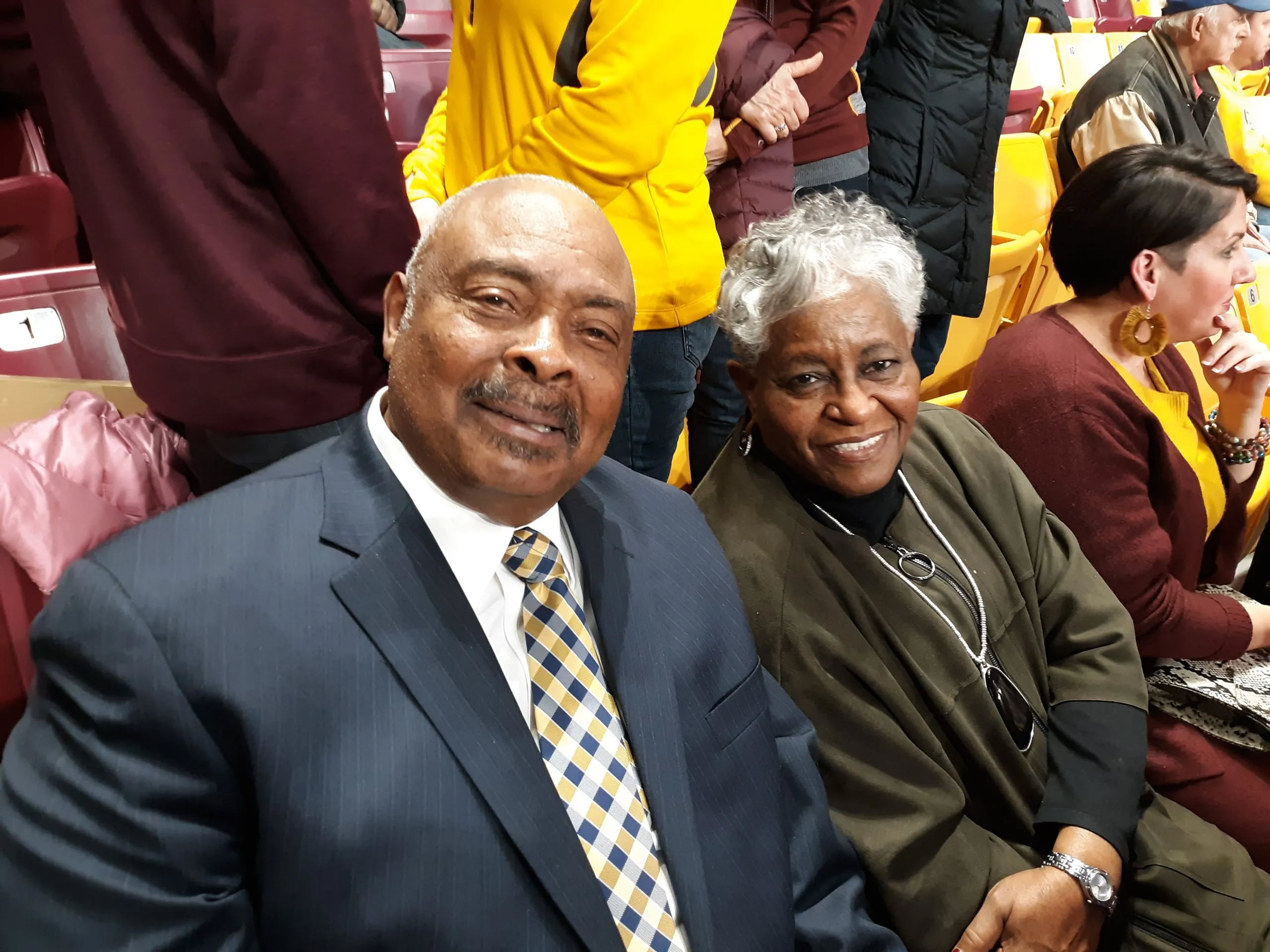
Final Four Fraud
A decade later, the Gopher team experienced yet another scandal, this time under the leadership of one of Dutcher’s successors, Clem Haskins.
This one was the infamous academic fraud imbroglio that arose a decade after the Madison incident during the 1996-97 season. Haskins led the team to another Big Ten title that year and the team’s only Final Four appearance, but all of the team’s achievements and records were wiped out by the NCAA due to the scandal that involved an academic aide, Jan Gangelhoff, writing papers for a number of players, with the knowledge and blessing of Haskins. Fired by the U, Haskins sued for breach of contract and ultimately received a $1.5 million settlement in a lawsuit in Hennepin County District Court in which the combatants were represented by litigation heavyweights, the iconic Ronald Meshbesher for the ousted coach, and the U by Lorie Skjerven Gildea of its general counsel office, who later became a judge on that tribunal in Minneapolis and then a member of the state Supreme Court before serving as Chief Justice of that tribunal from 2010-2013.
In a classic series of six degrees of separation that would make Kevin Bacon proud, Haskins was succeeded at the U by Dan Monson, the coach at the rising Seattle-based Gonzaga University, whose team defeated the Haskins-coached squad in a post season tournament game in 1999 that was to be Haskins’ last game for the Gophers before his ouster.
Monson coached here until 2006, when he was fired mid-season and replaced the following year with Smith, the former Kentucky coach, whose offer to the former interim coach Williams, whose career here devolved into court – the judicial one, not the basketball hard court.
To continue the “Six Degrees” scenario, when Smith was fired after the 2012-2013 season, he was replaced by Richard Pitino, whose father, Rick Pitino had preceded Smith as Kentucky coach, winning a national championship before Smith took over that position. He led that school to another NCAA title before moving here to Minnesota in 2007, serving through 2012-2013 when he was removed and replaced by Pitino’s son, Richard, who coached the Gophers Richard to a National Invitation title in his first year here, to multiple other post-season contests, and garnered a Big Ten Coach of the Year award before he was fired after a few subpar seasons by 2020 and replaced by Ben Johnson, a Minneapolis native, and former Gopher player under Monson. When he was discharged after four under-achieving seasons, he was replaced by Medved, now trying to turn the team around.
If this is getting confusing, it’s because it is.
Tussle Trio
The litigation growing out of the academic fraud scandal 30 years ago and the events in Madison 20 years before that were preceded a decade earlier with a trio of lawsuits involving sanctions imposed on Gophers players from 1972 to 1982, the year of Dutcher’s conference championship squad.
The first of these legal tussles occurred early in 1972, when two Gopher basketball players, Ron Behagan and Corky Taylor, were suspended for their part in an infamous on court end-of-game altercation in a key Big Ten game on campus between the Ohio State team and the hometown Gophers. But in a case entitled Behagan v. Intercollegiate Conference of Faculty Representatives, U.S. District Court Judge Earl R. Larson in Minneapolis enjoined the suspension on grounds that the players were denied due process by not being given notice of the charges or a hearing. Behagan and Taylor returned to the squad and helped lead the team to a Big Ten Championship under the coaching of Bill Mussleman, who left the school three years later as a scandal was brewing over recruiting and financing of players under his watch and later went on to become the inaugural coach of the Minneapolis-based Minnesota Timberwolves in 1989.
Four years after the Behagan brouhaha, another eligibility fracas developed. This time, the University sought to enjoin the National Collegiate Athletic Association (NCAA) from placing the basketball team on probation because the team refused to abide by an NCAA directive that star center Mychal Thompson and two teammates be declared ineligible due to receiving “extra benefits” in violation of NCAA regulations.
In the case of Regents of the University of Minnesota v. The National Collegiate Athletic Association, the Eight Circuit Court of Appeals reversed an injunction against the NCAA issued by Judge Edward Devitt of the U.S. District Court here. The appellate court ruled that the NCAA had followed due process to the university and the players in its fact-finding procedures, and the school was contractually obliged to abide by the NCAA probation. As a result, Thompson and his teammates were required to sit out several games that season, costing the team a chance at another conference championship.
Following his collegiate career, Thompson, the team’s all-time scoring leader and a top NBA draft choice, was again at the center of litigation in a case entitled Thompson v. First National Bank of St. Paul. The former Gopher, then a professional star with Portland, was among a group of investors who were sued over promissory notes they executed to secure financing for summer basketball camps in Minnesota operated under Thompson’s name. Thompson defended himself on jurisdictional grounds, asserting that because he was a nonresident, the Minnesota courts lacked personal jurisdiction. The state Court of Appeals affirmed the decision of the Hennepin County District Court in Minneapolis, upholding long-arm jurisdiction over the ex-Gopher on grounds that the basketball camps were built on Thompson’s reputation. Thompson worked at the camps for two summers, and he personally endorsed the notes. The court therefore concluded that the nature and quality of his contacts with Minnesota were sufficient to warrant long-arm jurisdiction.
Another high-scoring Gopher basketball player ran into eligibility problems in the early 1980’s and turned to the judicial arena for assistance. In Hall v. University of Minnesota, Mark Hall sued the university, seeking to continue his schooling so he could retain his eligibility to play during his senior year. Viewing the case as raising “serious and troubling” questions regarding intercollegiate college sports, U.S. District Court judge Miles Lord in Minneapolis ordered the university to allow Hall to enter an appropriate scholastic program because he was enticed to come to the university from his home in Massachusetts “to be a basketball player and not a scholar.”
Judge Lord took a harsh view of the “tug of war” between academic achievement and athletic eligibility and balanced the considerations in favor of the player’s interest in resuming intercollegiate basketball and enhancing his chances for a professional career. Hall returned to the team, but soon left the squad, which went on to win another Big Ten title without him. He never made it in professional basketball and died in a cocaine-related incident last year.
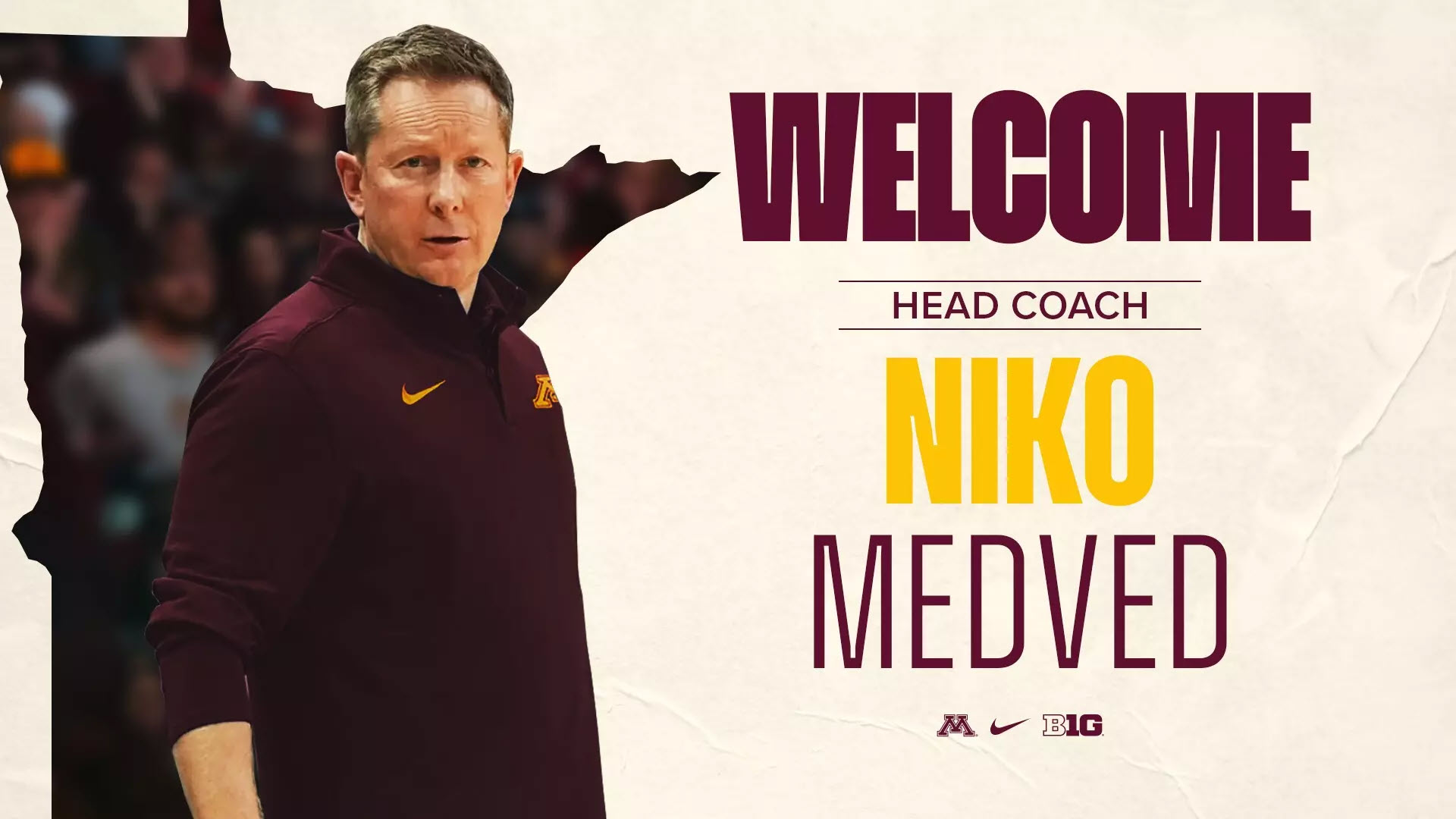
Now Roseville-raised Medved is trying to elevate the team from the depths and despair of recent years and return to the winning ways of the Musselman-Dutcher-Haskins eras of the 1970’s-1990’s, and do it without scandals and litigation that were the unfortunate hallmarks of those teams. As current University President Rebecca Cunningham has observed, the “landscape” of college basketball and other revenue-raising sports on campus has changed markedly since those halcyon days with Name, Image and Likeness (NIL) and other money flowing to the players and into to the coffers at the athletic department here at the ‘U’ and throughout the county.
The ball is now in Medved’s court to face the challenges and opportunities of coaching the team that has experienced the trials, literally and figuratively, and tribulations of the last five long decades, including the malaise growing out of the Madison incident at the end of January 40 years ago.

This story brought back so many memories. As an intramural hoops player at the University of Minnesota, my team from the Northsiide won our category tournament with Bart and Mike Riney, two De La Salle players. We played the championship game at Williams arena. What a thrill! Then we often played pickup games at Cook Hall, and Gopher coach Bill Musselman often participated. He was a hot head, sometimes picking fights with students. My neighborhood Northside team, with Patrick Henry stars Steve Lasley and George Jackson, haunted the Minneapolis and St Paul playgrounds for pickup games. Once, we played against Dave Winfield in St Paul. another time we played against a couple of Gopher stars at a court in south Minneapolis. And we often played against Gene Washington and Bill Brown, former Vikings, at the downtown YMCA. But the highlight of my basketball career was winning the all-University Intramural championship two years in a row at Pitt. We beat the football team with Dan Marino and High Green; and made history, with the only woman playing in the men’s division. I was till playing in an over-55 league in Montgomery County when I had a heart attack and stroke. But I still watch Gopher games whenever I get the chance. My suggestion: get a freee throws coach!
/Users/davidfeehan/Desktop/Social Work BB copy upright.pdf