
Simply put, time travelers going from St. Paul to Minneapolis would arrive before they left, while those going the other way were re-living an hour of their lives.

The beginning of Daylight Saving Time (DST) earlier this month occurred on the earliest possible date under federal law: the second Sunday in March, the 8th. By now, everyone is accustomed to the routine: moving the clock forward an hour (“Spring forward”) on the second Sunday in March and flipping it back 60 minutes on the first Sunday in November (“Fall back”).
But it hasn’t always been that way during the course of its turbulent history. Indeed, not even the Twin Cities could agree upon it some six decades ago. An incident 61 years ago this spring was instrumental in the development of current federal law to prevent such an anomaly from recurring. The “lowlight” occurred when crossing the border between the two Twin Cities resulted in a gain or loss of an hour, depending on which way a traveler was moving.
Farm Fight
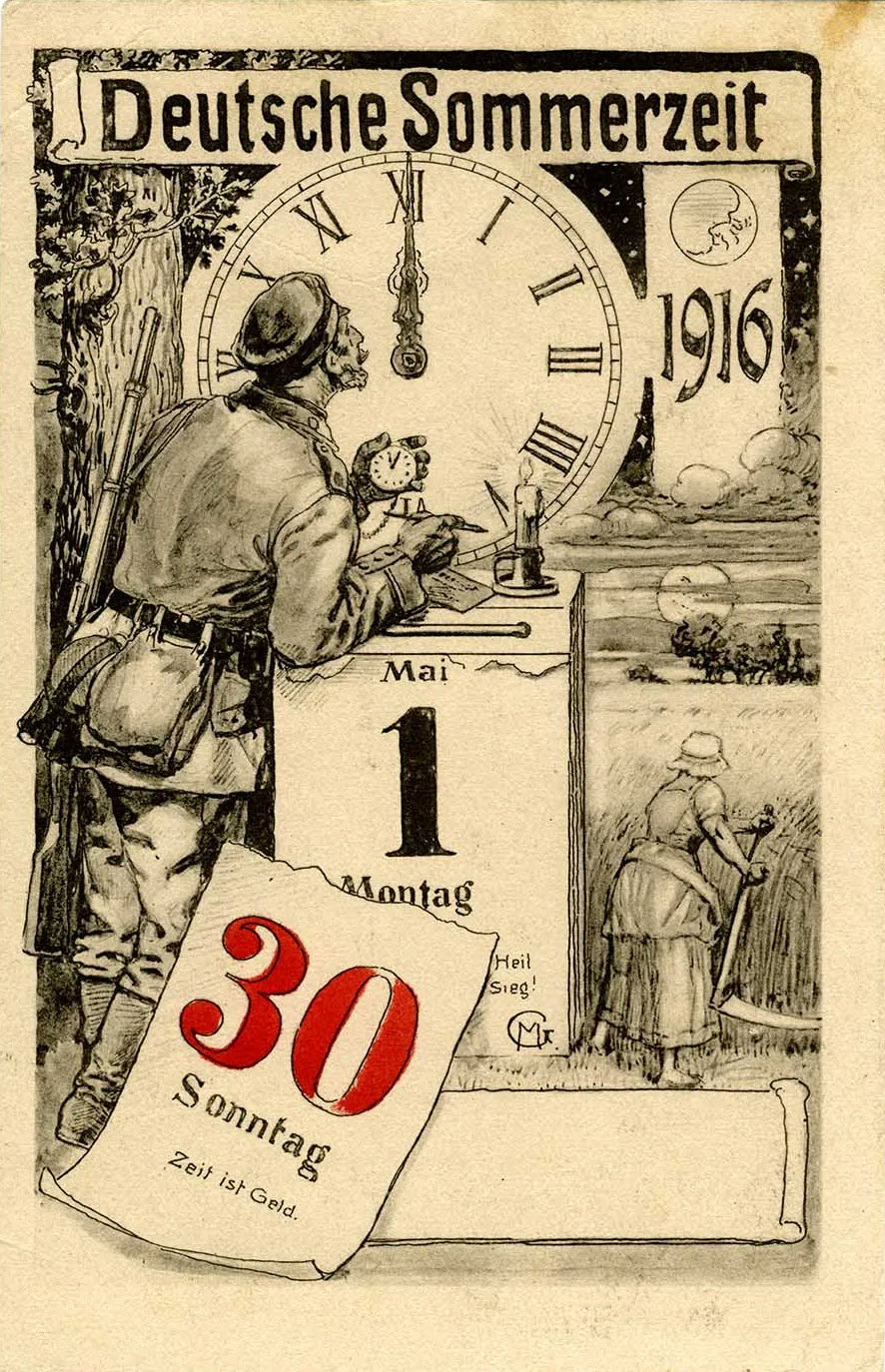
The history of DST goes back nearly a century, initially imposed by Germany and its allies during World War I and then adopted at the federal level in this country a short time later as a conservation measure. By extending daylight by an hour for much of the year, the arrangement sought to save fuel and energy for the war effort.
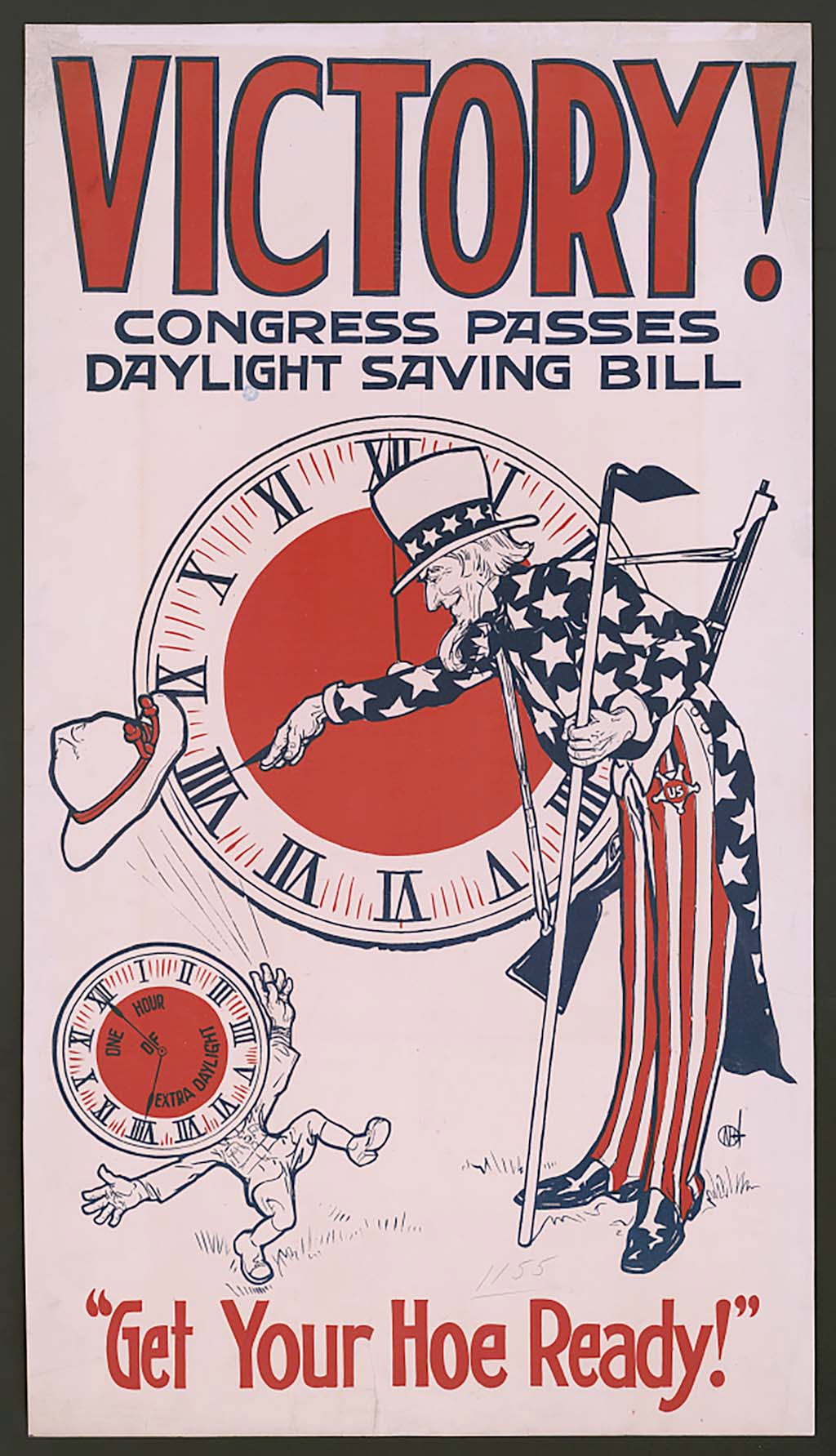
After the conflict was over, the concept faded. It was still sought by some areas, mainly metropolitan ones, and opposed by others—mainly rural ones who objected to the darkness that preceded the mornings when farm tasks started. Some even felt the time changes had an undesirable effect on animals, especially dairy herds.
But DST was not a new concept. The arrangement dates back to at least 1784, when an authority on time, Benjamin Franklin, advocated setting clocks forward to save on candle usage. In one of the states where it was sought, Massachusetts, a group of farmers challenged the measure on constitutional grounds in a lawsuit that reached the Supreme Court entitled Massachusetts Grange v. Benton. Rejecting an effort to enjoin state officials from enforcing the legislation, the High Court ruled against the farmers. The decision, written by the illustrious Justice Oliver Wendell Holmes Jr., held that the state had the authority to impose the law.
Undertaking Uniformity
Uniformity was on the minds of DST supporters after World War II. Following the cessation of hostilities, a patchwork of DST jurisdictions developed. The confusion led Congress to establish the 1966 Uniform Time Act, which provided a standard window for jurisdictions to use DST. This allowed states to opt-out, but only if they did so as a whole—a choice made by Arizona (except for the Navajo Nation) and Hawaii.
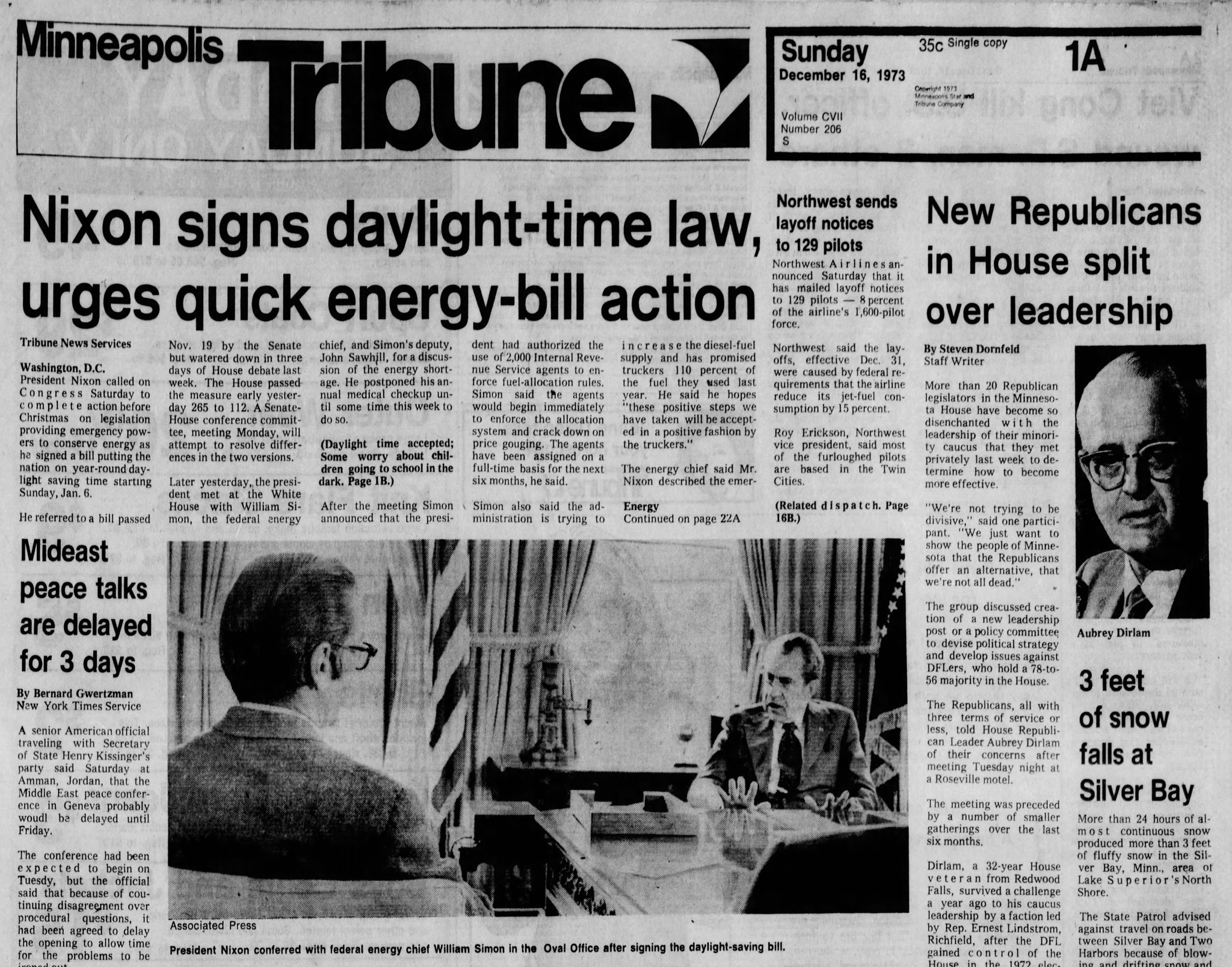
DST was also extended year-round during the Nixon administration during an energy crisis in 1973. However, after he resigned, his successor, President Ford, rescinded the directive. Currently, the hodgepodge has led to calls for even more uniformity, as reflected in the “Sunshine Protection Act.” Passed by the Senate in 2022 but currently dormant in the House, the measure advocated by Secretary of State Marco Rubio would provide for year-round DST.
The measure has broad support from recreational groups and businesses wanting more evening light, but it is opposed by many in the education profession who prefer more daylight early in the morning for students awaiting buses. Others seeking to abolish DST altogether include the authors of Project 2025, who cite studies suggesting that DST-related sleep deprivation contributes to health risks and medical malpractice errors.
Minnesota Matters
Moving into the fray, at least 19 states have enacted resolutions for full-time DST, which would require stalled congressional approval. The movement, known as “Lock the Clock,” has its advocates in Minnesota, including State Representative Michael Freiberg, who is now seeking to move up to the State Senate.
It would not be the first time that Minnesota has stepped in to avoid a recurrence of the anomaly that took place 61 years ago in March 1965. Minnesota was one of the states that refused to go on DST that year until May 23, while other states—including next-door Wisconsin—did so earlier.
But St. Paul decided to jump the gun. Joining the neighboring Badger State, the capital city and a few of its suburbs pushed their clocks ahead one hour on May 9. As a result, St. Paul was one hour ahead of nearly all the rest of the state, including Minneapolis, for a two-week span.
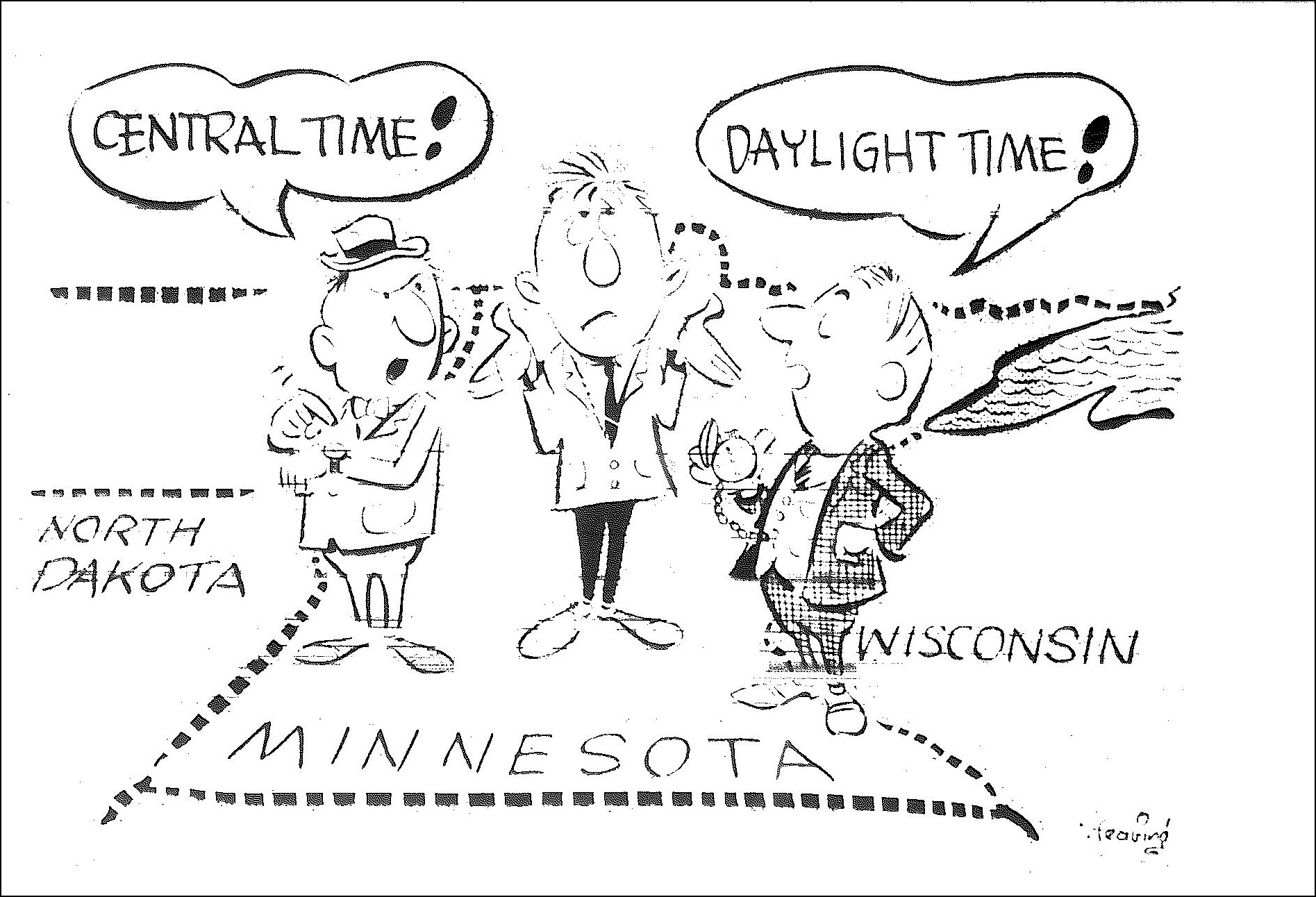
During that time, a vehicle going from the state capital to downtown Minneapolis on University Avenue (years before I-94 was completed) would arrive at its destination roughly 40 minutes before departing. Conversely, traveling the short distance the other way would take about 80 minutes on the clock.
Simply put, time travelers going from St. Paul to Minneapolis would arrive before they left, while those going the other way were re-living an hour of their lives. The juxtaposition led some wags to observe that it was the first time ever that St. Paul, which usually lags a decade behind Minneapolis, was actually ahead of its Twin City.
Chaos ensued. In St. Paul, the police moved an hour forward, but the fire department did not. Thus, police and fire responders summoned to an emergency might arrive simultaneously, yet be an hour apart on their respective timepieces. The epitome of the confusion was the multiple clocks at the Twin Cities International Airport, set at two different times to aid—or confuse—travelers.
After a couple of weeks, the nonsense subsided. But its high-profile status attracted national attention and led to the enactment of the uniform national timekeeping bill a year later. Whether we eventually end the practice or extend it permanently remains to be seen over time.
